 Contact Us Now
Snow & Ice Roof Damage Insurance Claims in Cheyenne, WY
Wyoming winters bring heavy snow load, ground blizzards, and repeated freeze-thaw cycling that stresses a commercial roof in ways a milder climate never does. We inspect and document snow and ice damage so the claim reflects the actual condition of the roof and structure, not a guess made after the snow has melted.
We are your roofing contractor, not a public adjuster, we document and substantiate the roof damage so you and your adjuster work from an accurate scope.
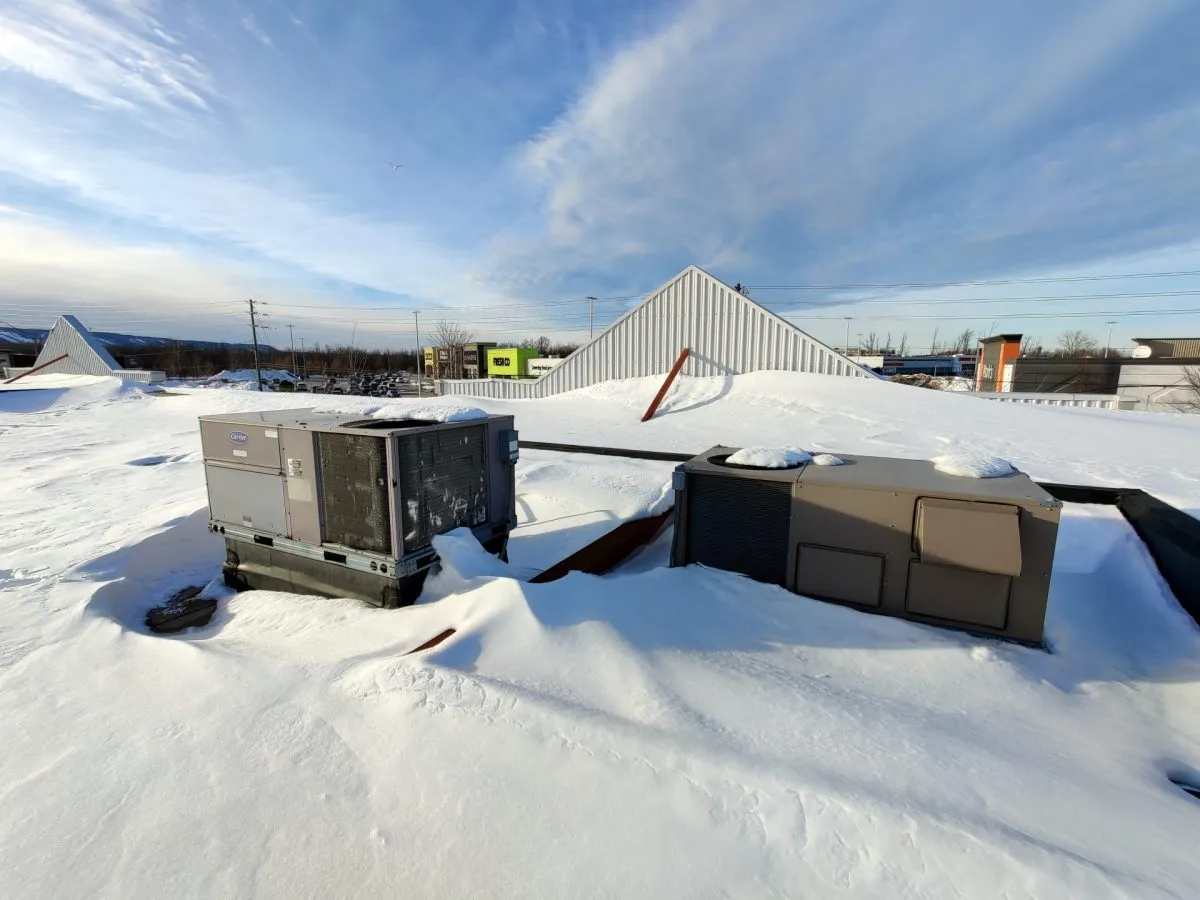
Cheyenne's winters are defined less by total snowfall than by wind-driven ground blizzards that redistribute snow into deep drifts at parapets, rooftop units, and any change in roof elevation. A roof that appears to carry a moderate, even load from ground level can have several feet of drifted snow stacked against a parapet wall or HVAC curb, concentrating structural load in a small area rather than spreading it evenly across the field. That drift pattern is often where the real risk sits, and it is easy to miss without a roof-level inspection.
Snow load damage on a commercial roof shows up in a few distinct ways: visible deflection in the roof deck or structural members, membrane stress or splitting at drift-loaded areas, and in the most serious cases, structural distress that requires immediate evacuation and shoring. We document load conditions with photos of drift depth and location, and where structural concern exists, we recommend a structural engineer evaluate the framing before any load is removed, since removing snow incorrectly can itself trigger a collapse on a roof already near capacity.
Ice dams are a persistent issue on Cheyenne's low-slope commercial roofs, particularly at drains, scuppers, and parapet transitions where meltwater refreezes before it can drain off the roof. A blocked or partially frozen drain backs water up under the membrane or against flashing, and that backed-up water can find its way through seams, penetrations, or aged flashing long before anyone notices standing ice on the roof surface. We inspect drainage systems as part of any winter damage assessment, because a drainage failure is often the root cause behind what looks like a membrane leak.
Freeze-thaw cycling across a Wyoming winter, sometimes multiple cycles within a single week during a chinook wind event, accelerates the failure of existing membrane cracks, flashing seals, and pitch pans. Damage that started as a small hail fracture or minor seam separation earlier in the year can be driven into a full breach by repeated freeze-thaw expansion during the winter months. Documenting this progression matters for a claim, since it establishes whether the damage traces to an earlier storm event or represents ongoing wear.
Roof snow retention and drainage design are part of how we help Wyoming building owners reduce future claims rather than only document past ones. Where a roof shows a pattern of drift-related stress or repeated drain freezing, we can recommend snow retention systems, drain heat trace, or drainage upgrades as part of the repair scope, so the fix addresses the underlying condition rather than repeating the same claim next winter.
Snow & Ice Claim Questions
Does insurance cover snow load roof damage?
Most commercial property policies cover collapse or structural damage caused by the weight of snow or ice, subject to your policy's terms, maintenance requirements, and any exclusions. We document the load and the resulting damage; your carrier confirms what your specific policy covers.
What causes ice dams on a commercial flat roof?
Ice dams on low-slope roofs typically form at drains, scuppers, and parapet transitions, where meltwater refreezes faster than it can drain and backs up under the membrane or against flashing. Blocked or undersized drains make the problem worse.
How do we document snow damage before it melts?
We photograph accumulation depth and drift patterns where it is safe to access the roof, document any visible deflection or interior signs of overload, and inspect drains and scuppers for ice blockage. Documentation gathered while the load is present gives the clearest record for a claim.
Can removing snow from a roof make things worse?
Yes, if done incorrectly on a roof already near structural capacity. Uneven snow removal can shift load suddenly. We recommend a structural evaluation before snow removal on any roof showing signs of deflection or distress.
Related Roof Work
Useful next pages for this claim.
Insurance Claim Assistance
The full claims-support process: inspection, documentation, adjuster coordination, and scope review.
View ScopeSnow Load Roof Planning
Structural and drainage planning ahead of the next Wyoming winter, before the load becomes a claim.
View Scope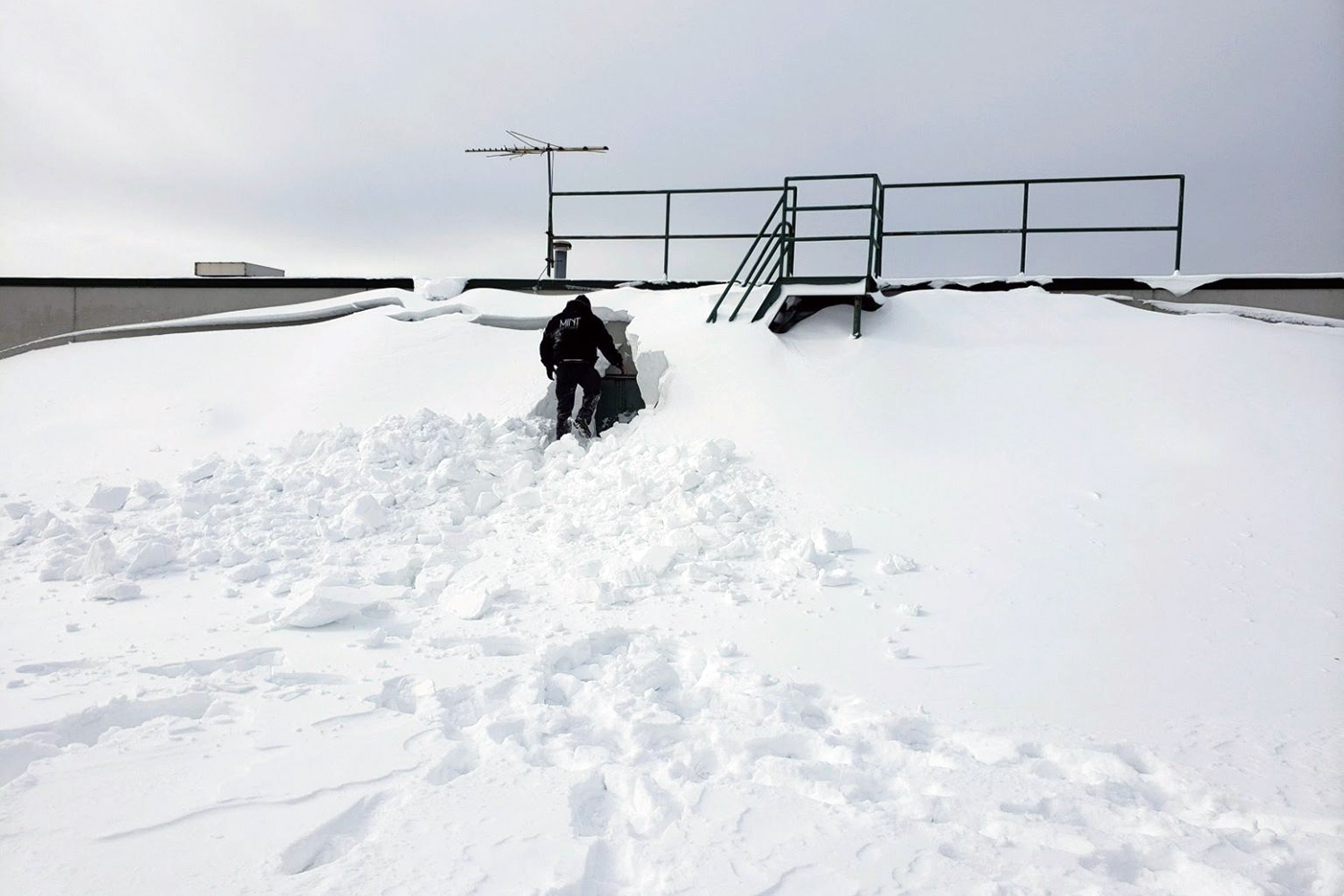
Roof Snow Retention & Metal Trim
Retention systems that control drift and slide risk on metal and low-slope roofs.
View ScopeGet the roof decision into writing.
Tell us what changed on the roof, where the building sits, and who needs the report. We will turn the next step into a clear scope.