 Contact Us Now
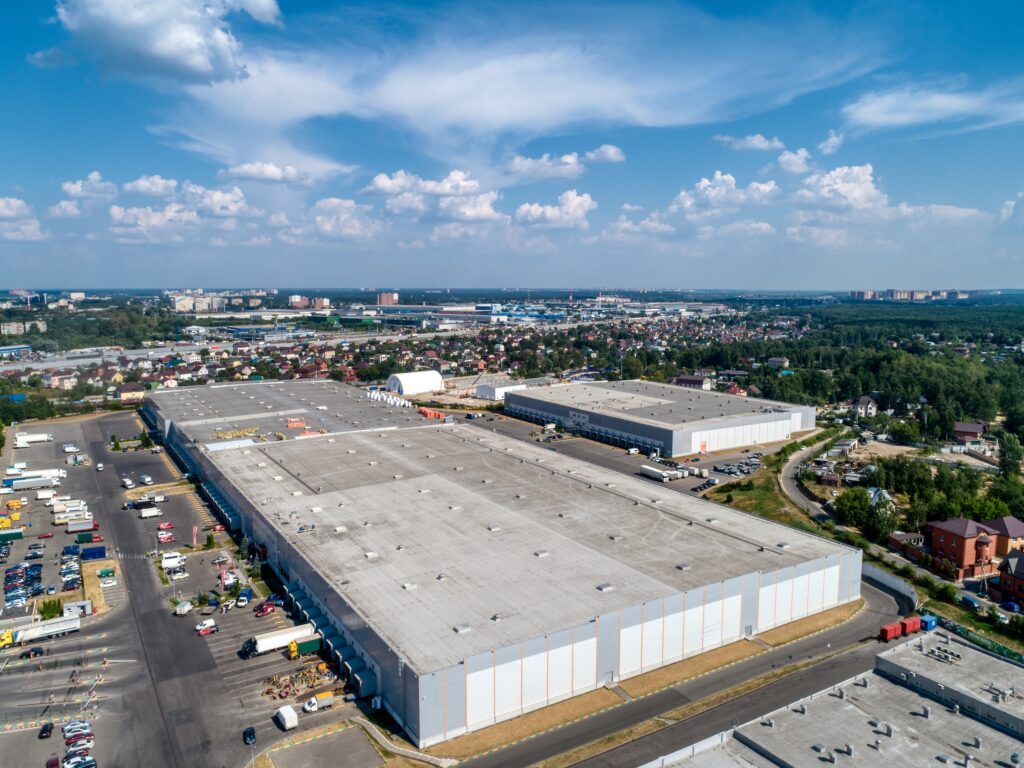
Warehouse and Distribution Center Roofing in Cheyenne, WY
Warehouse and Distribution Center Roofing works best when the repair plan, replacement timing, and documentation all point to the same decision. We consider the I-25 and I-80 freight interchange, Frontier Mall and nearby service buildings, snow drift at parapets and rooftop units, and Capitol Avenue office buildings before we recommend work.
That keeps the scope tied to the roof that is actually on the building: membrane condition, seams, metal, drainage, rooftop units, access, tenant needs, and timing.
Wyoming Food Distribution's cold-storage and dry goods warehouse operations in Cheyenne serve retailers, restaurants, and institutions across southeastern Wyoming and northern Colorado from facilities that must survive one of the most extreme roofing environments in the lower 48 states. Cheyenne, at 6,062 feet elevation on the high plains of Laramie County, combines the snow load challenges of a mountain city with wind exposure more characteristic of an open prairie site, because it occupies exactly that position, perched on the edge of the Laramie Range where the plains meet the foothills and wind has no barrier to build against.
Wind is the defining design challenge for Cheyenne warehouse roofs. The city's average annual wind speed of 12.9 mph is one of the highest for any major US city, and sustained wind events exceeding 40 mph occur dozens of times per year. Gusts associated with Chinook wind events on the east slope of the Laramie Range can exceed 80 mph with virtually no warning, and the ASCE 7 design wind speed for Laramie County industrial buildings reaches 115-120 mph for Risk Category II structures. Ballasted roofing systems are completely inappropriate for Cheyenne warehouse facilities; mechanically fastened or fully adhered single-ply systems with engineered perimeter and corner attachment patterns are the only acceptable approaches for buildings in this exposure category.
Snow load engineering at Cheyenne's elevation must account for both the ground snow load, which is substantial at 30 psf for much of Laramie County, and the potential for wind-driven drift accumulations on warehouse roofs near parapet walls, equipment screens, and rooftop mechanical penthouses. Wind-driven snow on a Cheyenne warehouse roof can deposit drift accumulations several times the flat-roof design load within hours during an intense winter storm, and these concentrated loads can exceed deck capacity if not managed through drift-mitigation design (sloped parapets, equipment placement away from low-elevation zones) and active snow removal protocols. A structural engineer familiar with Wyoming's wind-driven drift patterns is an essential project team member for any major Cheyenne warehouse roofing project.
EPDM is the preferred membrane for Cheyenne warehouse roofs due to its cold-temperature performance. Winter temperatures in Cheyenne frequently drop below -20°F, and the rubber membrane maintains adequate flexibility at these extreme temperatures for emergency maintenance activities. TPO and PVC membranes, while used successfully in moderate cold climates, become significantly more brittle at Cheyenne's temperature extremes and require careful cold-weather installation techniques if applied in fall or spring when temperatures can swing from -10°F overnight to 50°F by midday. EPDM's long performance record at high-altitude Wyoming installations, where UV intensity is significantly higher than at sea level due to thinner atmospheric filtering, provides an additional advantage over competing membrane types.
Dock canopy flashings and loading dock area roofing on Cheyenne warehouses face the dual stress of wind-scour from the persistent high-plains wind and the freeze-thaw cycling that occurs repeatedly throughout the October-through-April shoulder season. Metal components at dock canopy edges and parapet copings must be mechanically fastened at close intervals to prevent wind uplift on individual metal sections, and sealant used at lap joints must be rated for the extreme temperature range that Cheyenne materials experience. Silicone-based sealants with broad temperature flexibility (-65°F to +300°F service range) outperform standard butyl or urethane sealants in Cheyenne's demanding thermal environment.
Forklift and material handling exhaust ventilation on Cheyenne warehouses presents a cold-climate operational challenge: rooftop exhaust fans operating on heating-season airflow must be specified to handle the density difference of cold, dense Cheyenne air compared to sea-level design assumptions. Fan motors rated for the temperature range and motor heater packages that prevent lubricant thickening at sub-zero temperatures are standard specifications for Cheyenne industrial facilities. The roof curb details must insulate the exhaust path from the ambient rooftop temperature to prevent condensate from freezing in the exhaust stack and restricting or blocking airflow during the coldest January and February days.
Wyoming's building code is administered at the state level through the Wyoming State Construction Department, with enforcement delegated to local jurisdictions. Cheyenne and Laramie County both enforce building codes aligned with the IBC and IECC, and re-roofing permit applications must include wind uplift calculations demonstrating compliance with the high design wind speeds applicable to this exposure zone. The energy code requirement for Cheyenne in IECC Climate Zone 6 calls for R-30 minimum continuous insulation on commercial roofs, which means most pre-2005 warehouse buildings will need significant insulation additions as part of a code-compliant re-roofing project.
High-altitude UV exposure in Cheyenne accelerates the oxidation and photodegradation of roofing materials significantly compared to lower-elevation installations. At 6,000 feet, UV intensity is approximately 20 percent higher than at sea level, which means that the accelerated weathering tests used by manufacturers to project service life understate the actual weathering rate for Cheyenne installations. Specifying a 60-mil EPDM membrane rather than 45-mil, selecting TPO membranes with UV-stabilizer packages formulated for high-altitude use, and conducting more frequent inspection intervals (annually rather than every two years) are all appropriate adjustments for Cheyenne's UV environment.
Seasonal scheduling for Cheyenne warehouse re-roofing is tightly constrained. The dependable installation window for adhesive-applied systems and properly cured seams runs from approximately late May through late September, leaving only four months of reliable construction weather. Projects that cannot be completed within a single season require careful planning of seasonal tie-offs and temporary protection for in-progress work during the long Cheyenne winter. Most experienced Wyoming commercial roofing contractors plan their project loads to complete all Cheyenne work before the first fall snow, which can arrive as early as mid-September in years with early polar air outbreaks.
- What wind speed must a Cheyenne warehouse roof be designed for?
- ASCE 7 wind speed maps designate Laramie County at design wind speeds of 115-120 mph for Risk Category II industrial buildings. Given Cheyenne's position at the edge of the Laramie Range where Chinook events can produce extreme gusts, roofing system designers should consider specifying attachment systems beyond the code minimum, particularly at roof corners and perimeters where uplift forces are highest.
- What is the best single-ply membrane for a Cheyenne warehouse?
- EPDM at 60-mil thickness is the recommended membrane for Cheyenne warehouses due to its cold-temperature flexibility, UV resistance at high altitude, and long track record in Wyoming's climate. Fully adhered EPDM over high-R polyiso insulation provides the combined wind uplift resistance and energy performance required by Laramie County building codes and the demanding climate.
- How much snow load does a Cheyenne warehouse roof need to support?
- Ground snow loads in Laramie County range from 25 to 30 psf, translating to flat-roof snow loads of approximately 18-22 psf before drift considerations. Wind-driven drifts on Cheyenne warehouse roofs can accumulate far beyond these design values in areas adjacent to parapets and equipment screens, so drift-sensitive areas should be designed for higher loads and monitored actively during heavy snow events.
- When is the best time to re-roof a warehouse in Cheyenne?
- June through August is the optimal window for Cheyenne warehouse re-roofing, providing the most reliable weather conditions for adhesive curing and seam welding. Projects should be mobilized no later than early June to ensure completion before the potential for early fall snowfall, and contracts should include clear provisions for temporary protection and resumption procedures if a weather event interrupts work in progress.
- Does Wyoming require building permits for commercial re-roofing?
- Yes. Commercial re-roofing permits are required from the City of Cheyenne Building Division for projects within city limits and from Laramie County for unincorporated properties. Permit applications must include project specifications, wind uplift calculations, and insulation R-value documentation. Projects that bring buildings into compliance with current energy codes may qualify for expedited review processing under Wyoming's commercial construction program.
Related Roof Work
Useful next pages for this roof decision.
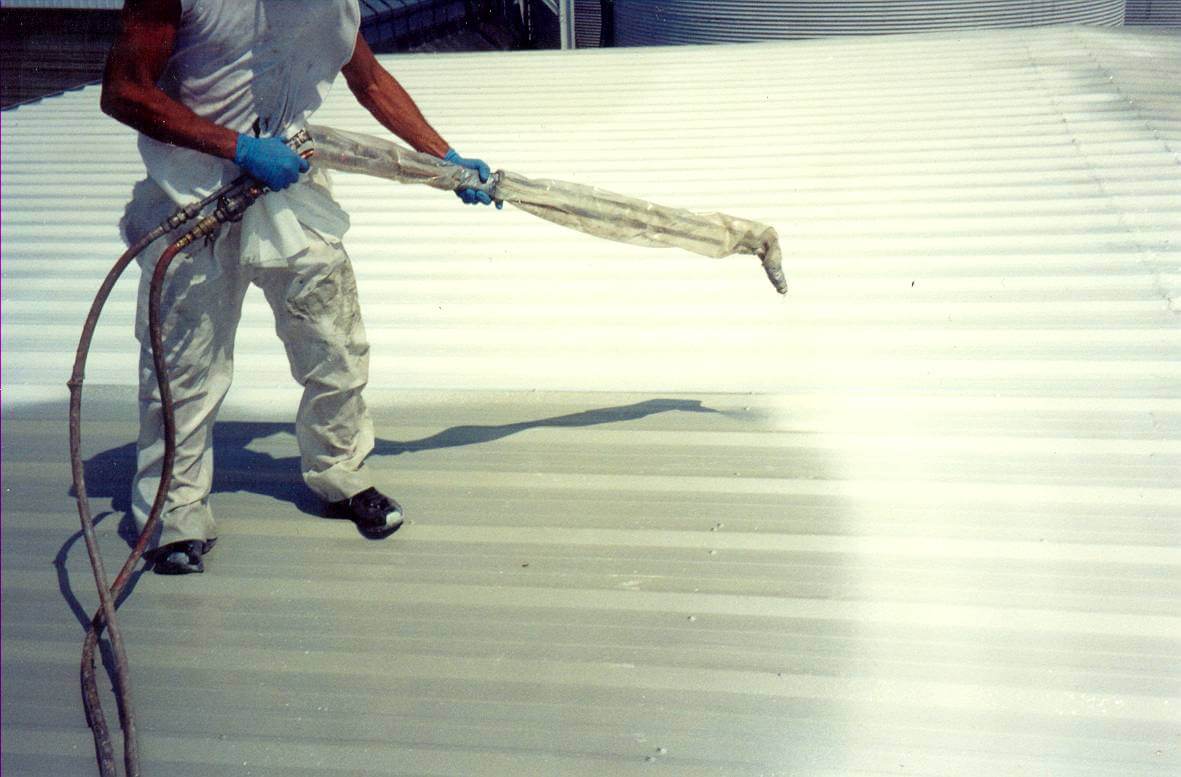
Commercial Roof Coatings
Commercial Roof Coatings is scoped around the I-25 and I-80 freight interchange, Frontier Mall and nearby service buildings, and snow drift at parapets and rooftop units. The scope stays practical: stop water first, document the roof, then choose the repair or replacement path that fits the building.
View Scope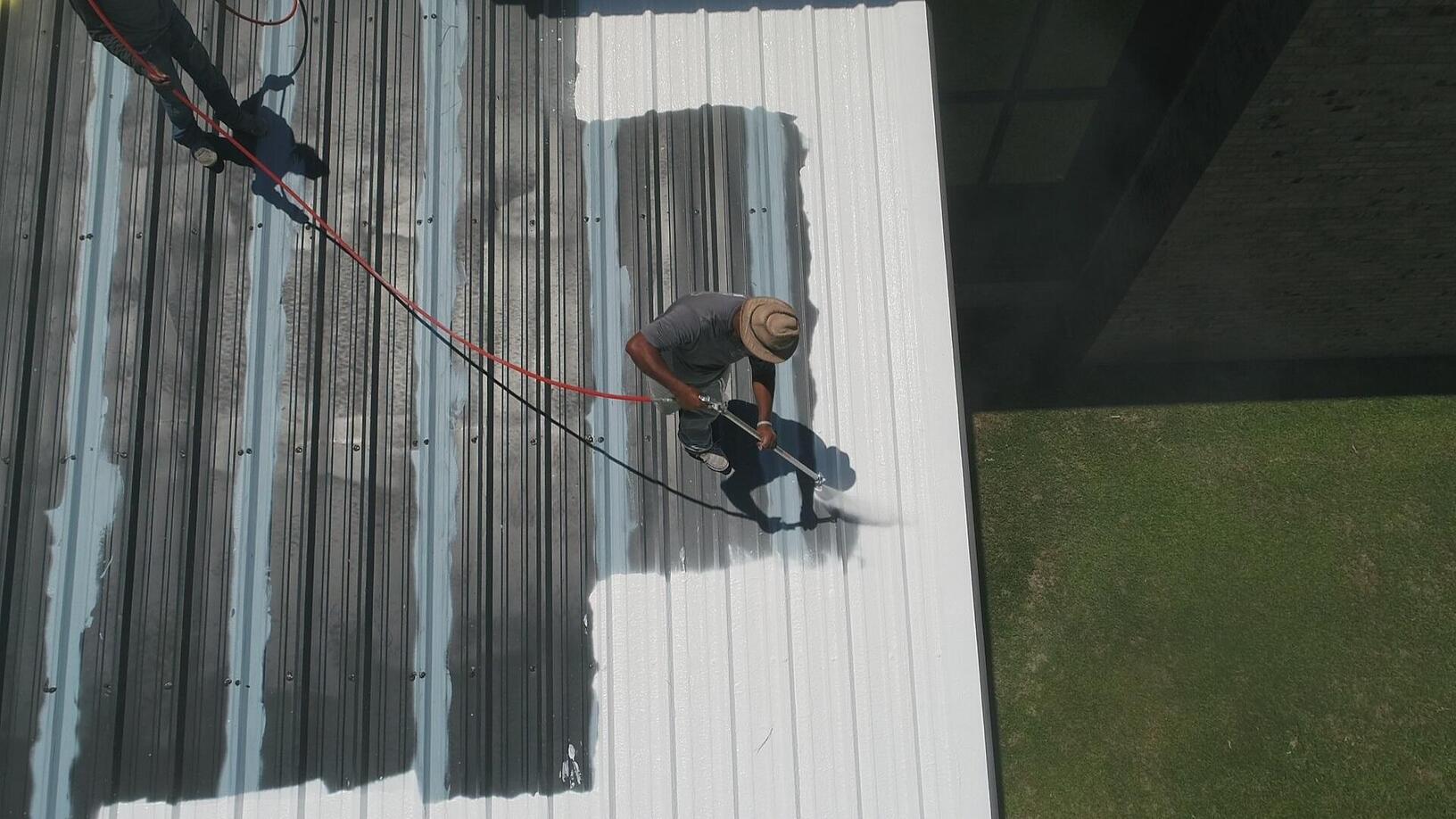
Commercial Roof Restoration
Commercial Roof Restoration is scoped around Cheyenne Logistics Hub properties, North Range Business Park warehouses, and the I-25 and I-80 freight interchange. We keep access, weather windows, and tenant disruption in the plan before crews step onto the roof.
View Scope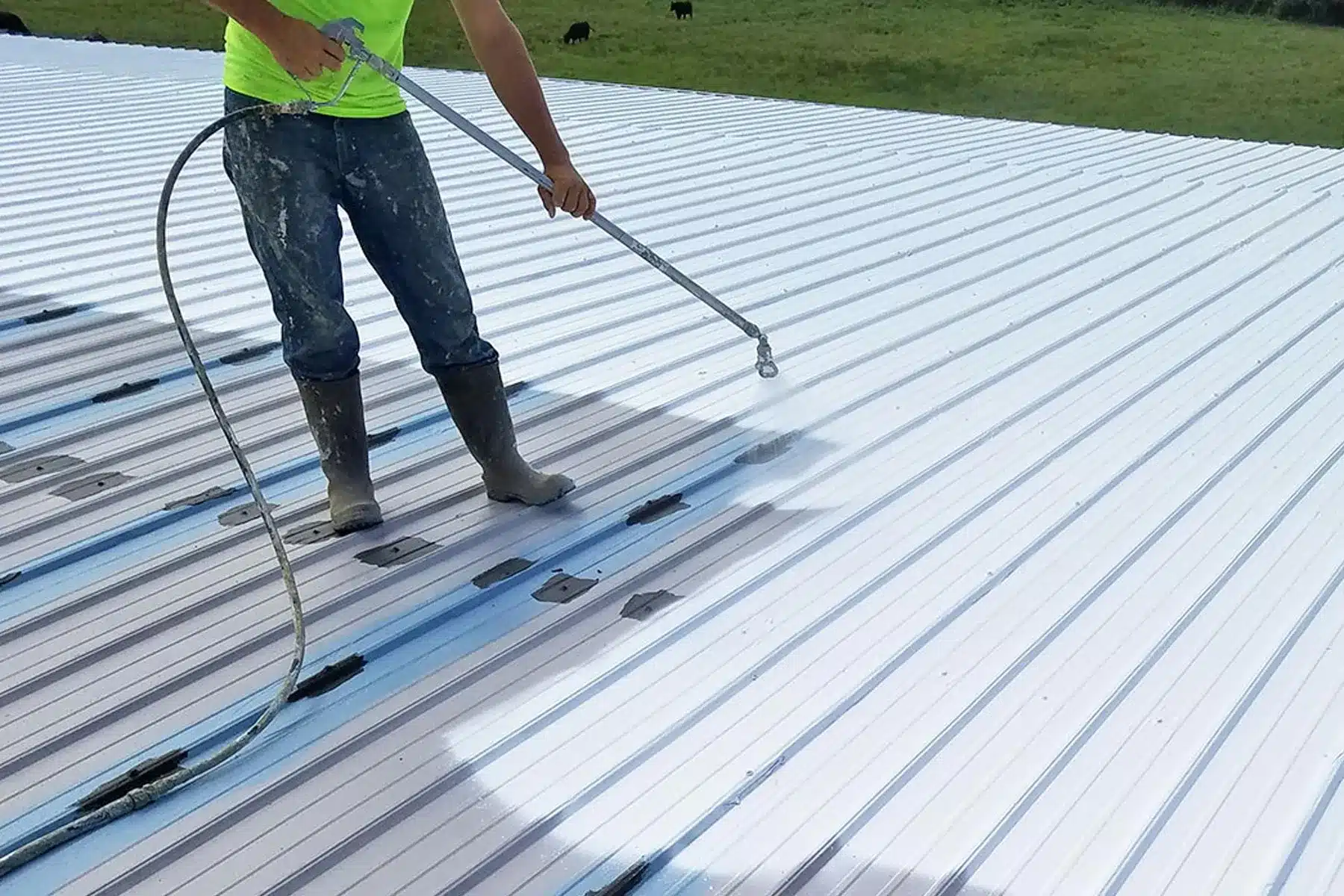
Fluid-Applied Roofing
Fluid-Applied Roofing is scoped around South Cheyenne industrial sites, Laramie County business parks, and Cheyenne Logistics Hub properties. Every recommendation is tied to observed conditions, not a prewritten roof package.
View ScopeGet the roof decision into writing.
Tell us what changed on the roof, where the building sits, and who needs the report. We will turn the next step into a clear scope.