 Contact Us Now
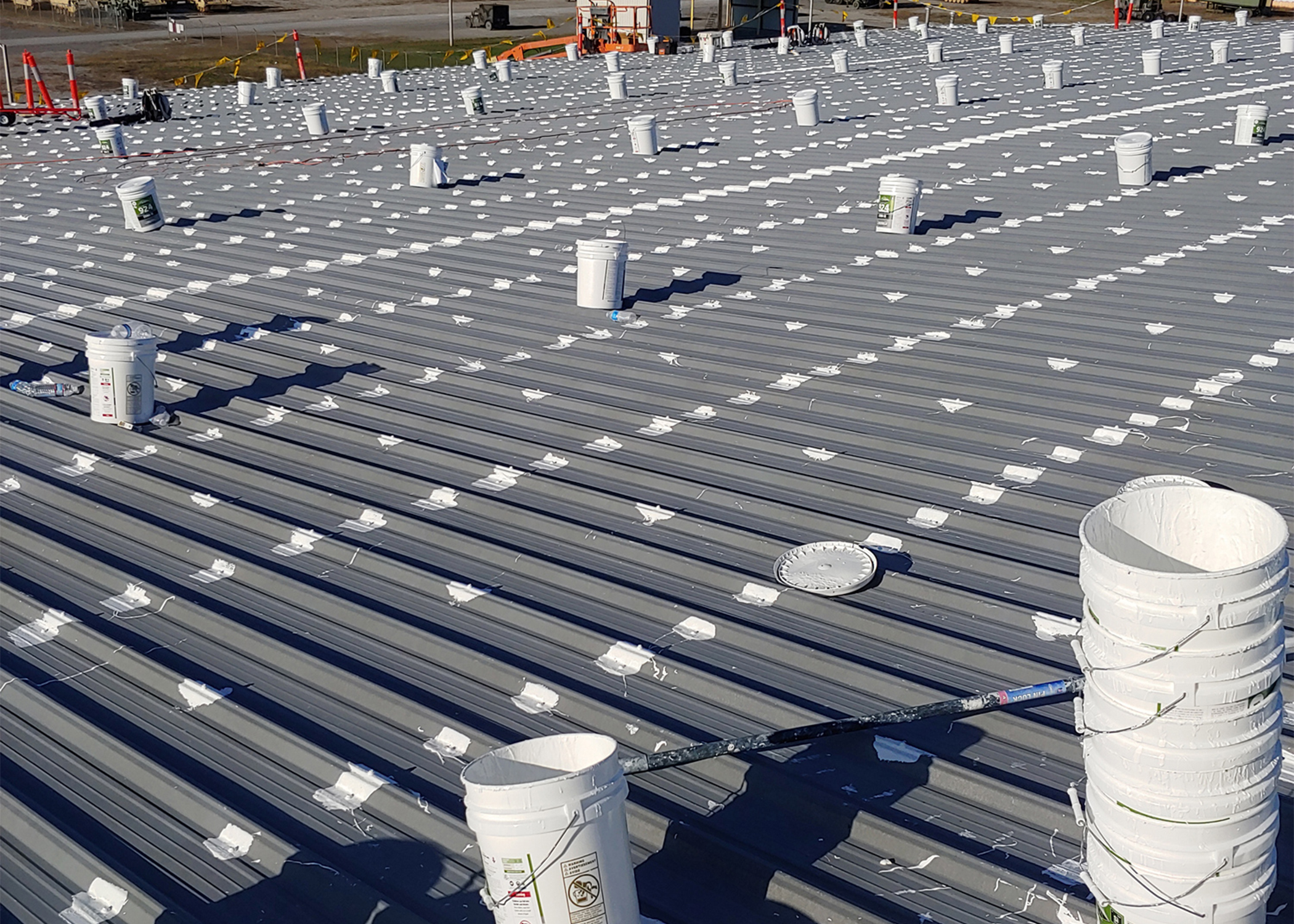
Silicone Roof Systems in Cheyenne, WY
A roof scope for Silicone Roof Systems has to start with what the building is doing today. We consider Cheyenne Regional Airport facilities, High Plains wind and hail exposure, Laramie County public buildings, and Dell Range Boulevard retail roofs before we recommend work.
That keeps the scope tied to the roof that is actually on the building: membrane condition, seams, metal, drainage, rooftop units, access, tenant needs, and timing.
Silicone fluid-applied roofing systems have emerged as one of the most appropriate restoration and new-installation choices for Cheyenne commercial flat roofs, and the reason is directly tied to the climate. Silicone's defining performance characteristic, its resistance to degradation under sustained ponding water, addresses the most common failure mechanism on Cheyenne low-slope commercial roofs. Where acrylic coatings wash out, blister, and lose adhesion under prolonged water contact, silicone remains stable and watertight. On a Cheyenne flat roof where drainage-challenged geometry and freeze-blocked drains create regular ponding conditions, that distinction in ponding resistance translates directly into measurable service life differences.
The chemistry behind silicone's ponding water resistance is worth understanding. Silicone is an inorganic polymer, silicon-oxygen backbone rather than the carbon-based backbone of acrylic, urethane, and bituminous coatings. This inorganic structure does not swell, emulsify, or degrade under water contact the way organic coatings do. A silicone membrane that has been under several inches of ponded water for a week performs the same as one that drained immediately after application. For Cheyenne commercial buildings with roofs that accumulate days of ponded water during spring thaw events and after heavy rain, this is not a minor technical distinction, it is the difference between a coating that will reach its design service life and one that will begin failing in the areas that pond water most frequently, which are also typically the most stress-prone areas of the roof.
Application temperature and wind speed constraints make silicone installation scheduling in Wyoming more demanding than in lower-wind, more moderate-temperature markets. Most silicone roofing manufacturers specify minimum application temperatures of 35 to 40°F for the substrate, with some cold-weather formulations allowing application down to 25°F. More practically in Cheyenne, wind speed is the binding constraint: silicone applied in sustained winds above 15 to 20 mph can experience uneven coverage, overspray drift, and surface texture issues that affect both appearance and film thickness. A silicone installation on a large Cheyenne commercial roof requires weather monitoring and daily go/no-go decisions based on both temperature and wind forecast. Contractors who do not build this flexibility into their production schedule will push silicone applications in conditions that compromise quality.
Substrate preparation is the single most consequential variable in silicone system performance. Silicone has excellent adhesion to properly prepared TPO, EPDM, modified bitumen, and metal surfaces, but it will not bond reliably to substrates that are contaminated with oil, silicone residue from prior applications, or moisture. On Cheyenne commercial roofs that have been maintained with petroleum-based lap sealants or tar-based products, thorough cleaning and adhesion testing before application is mandatory. We perform adhesion pull tests on prepared substrates before full application begins on every silicone project, this takes a few hours and saves the cost of a failed application on an improperly prepared surface.
Silicone film thickness is a performance and warranty determinant that requires careful installation control. Most silicone roofing systems are warranted at minimum dry film thicknesses of 20 to 30 mils, applied in one or two coats depending on the system. Achieving consistent film thickness across large commercial roof planes in Cheyenne's wind environment requires skilled spray application with calibrated equipment and real-time thickness monitoring. Thin areas, caused by wind interference, equipment variability, or applicator technique, are the locations where the coating fails first. We verify film thickness by wet-mil gauge during application and dry-mil gauge after cure on every silicone project, with additional coats applied to any areas below minimum specification before the project is closed out.
Silicone on metal roofing is a particularly effective combination for Cheyenne industrial buildings in North Range, Campstool, and the Business Parkway. Older standing-seam and ribbed metal roofs that have intact panels but failing lap sealants and weathered coatings are strong candidates for silicone restoration. A properly prepared metal roof with silicone applied over fully caulked seams and laps creates a seamless, flexible membrane that bridges the metal's thermal movement and eliminates the lap sealant as a maintenance item for ten or more years. At Cheyenne's altitude and UV index, a silicone coating's UV stability, it does not chalk or degrade under UV exposure the way acrylic coatings do, is a meaningful performance advantage over lower-cost coating alternatives.
The irregular geometry common on older Cheyenne industrial buildings, multiple roof levels, numerous penetrations, equipment curbs added over time, and non-standard edge conditions, is actually a context where fluid-applied silicone outperforms sheet membrane systems. Sheet membranes require fabricated flashings at every transition, penetration, and geometric change. A fluid-applied silicone system bridges these transitions seamlessly, with reinforcing fabric embedded in the coating at seams and penetrations rather than complex fabricated flashings. For buildings where the geometric complexity makes sheet membrane installation expensive and the seam count makes long-term leak risk high, silicone's seamless application profile is a tangible performance advantage.
Warranty terms for silicone roof systems are available from major manufacturers at 10 and 15-year terms with re-coat options that extend coverage at the end of the warranty period. The re-coat provision is a meaningful feature for Cheyenne building owners: rather than replacing the entire system at warranty expiration, a silicone system can be top-coated with a new silicone application at a fraction of original installation cost to restore full protection and issue a new warranty term. This renewing cost structure makes silicone systems more economical over a 20 to 30-year horizon than single-install systems that require full replacement at end of life, and the re-coat decision point aligns well with the capital budget cycle of most commercial building owners.
Silicone systems are not universally appropriate for every Cheyenne commercial roof condition. Roofs with active structural deck problems, severely deteriorated insulation, or multiple prior coating layers that have failed adhesion require more intervention than a silicone coating can provide. Silicone restores a functional surface on a fundamentally sound but weathered existing assembly, it does not remediate structural or insulation problems beneath the coating. For every proposed silicone project, we assess the underlying assembly through core cuts and probe inspection to confirm that the existing system is an appropriate substrate for silicone restoration rather than a candidate for tear-off and replacement.
Questions Owners Ask
Why is silicone better than acrylic coating for Cheyenne flat roofs?
The key difference is ponding water resistance. Acrylic coatings are water-based formulations that degrade when in sustained contact with ponded water, they soften, lose adhesion, and eventually wash out at ponding locations. Silicone is unaffected by ponded water contact and maintains full adhesion and film integrity regardless of how long water sits on the surface. On Cheyenne flat roofs where drainage problems, frozen drains, and spring snowmelt events create regular ponding conditions, this difference determines which coating reaches its design service life and which fails prematurely at exactly the locations where it matters most.
How long does a silicone roof coating system last in Cheyenne?
A properly installed silicone system at adequate film thickness should perform for 15 to 20 years in Cheyenne's climate before the film thickness diminishes to the point where re-coating is warranted. Most manufacturer warranties are issued at 10 to 15 years, with a re-coat option that extends the warranty for an additional term. Cheyenne's high UV index and temperature extremes are the primary aging factors, silicone handles both well, which is why its actual service life in this climate aligns closely with its warranted term rather than falling short of it the way organic coatings often do.
Can silicone be applied over an existing TPO or EPDM membrane?
Yes, with proper surface preparation. Silicone adheres well to both TPO and EPDM substrates that are clean, dry, and free from incompatible contaminants. EPDM surfaces may require a primer to achieve adequate adhesion, we always perform adhesion pull tests on EPDM before full application. TPO surfaces must be thoroughly cleaned to remove chalking, oxidation, and any prior sealant residue. Silicone over existing single-ply is a proven restoration approach for Cheyenne commercial buildings that have sound single-ply membranes with deteriorating seams or surface degradation, it restores waterproofing performance without the cost and disruption of full tear-off and replacement.
What wind conditions prevent silicone application in Cheyenne?
Most silicone contractors limit application to days with sustained winds below 15 mph and gusts below 20 to 25 mph. Above these thresholds, spray application produces uneven coverage, overspray that drifts to unintended surfaces, and surface texture irregularities. Cheyenne frequently exceeds these thresholds, particularly in spring and fall when frontal passages bring sustained high winds. We monitor daily wind forecasts for all active silicone projects and build schedule contingency for wind days into every project timeline. A silicone project on a large Cheyenne commercial roof should have at least 20 to 30 percent schedule contingency for weather delays compared to a similar project in a calmer climate.
How do I know if my existing roof is a good candidate for silicone restoration?
Good silicone restoration candidates have: a structurally sound deck; insulation that is primarily dry (confirmed by core cuts or moisture scan); an existing membrane that is adequately adhered without widespread delamination; and no more than one prior coating layer. Buildings where the existing assembly has multiple failures, significant moisture in the insulation, or widespread membrane delamination need more intervention than silicone can provide. We assess restoration candidacy through a pre-application inspection that includes core cuts and adhesion testing, this inspection is the basis for a written recommendation on whether silicone restoration is appropriate or whether a more comprehensive remediation is needed.
Related Roof Work
Useful next pages for this roof decision.
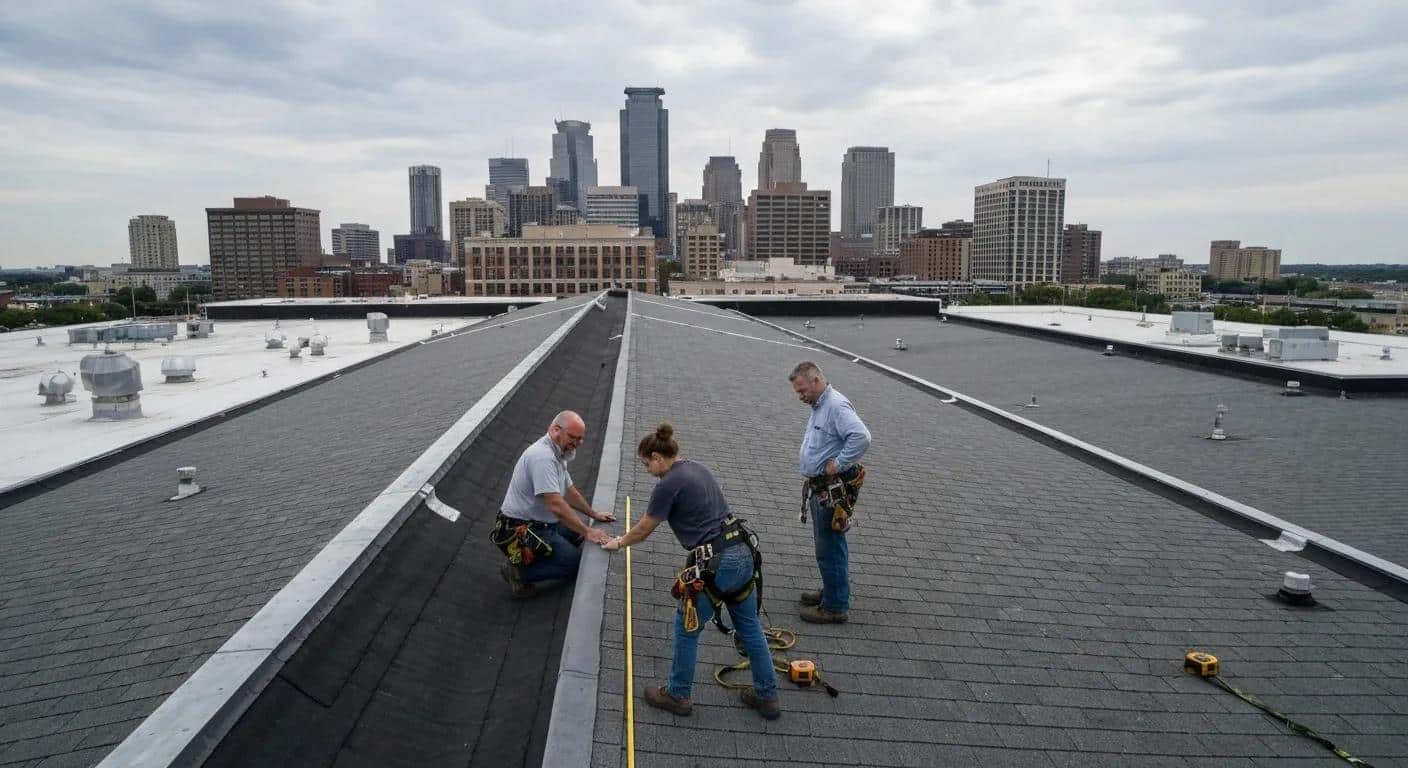
New Commercial Roofing
New Commercial Roofing is scoped around North Range Business Park warehouses, the I-25 and I-80 freight interchange, and Frontier Mall and nearby service buildings. The scope stays practical: stop water first, document the roof, then choose the repair or replacement path that fits the building.
View Scope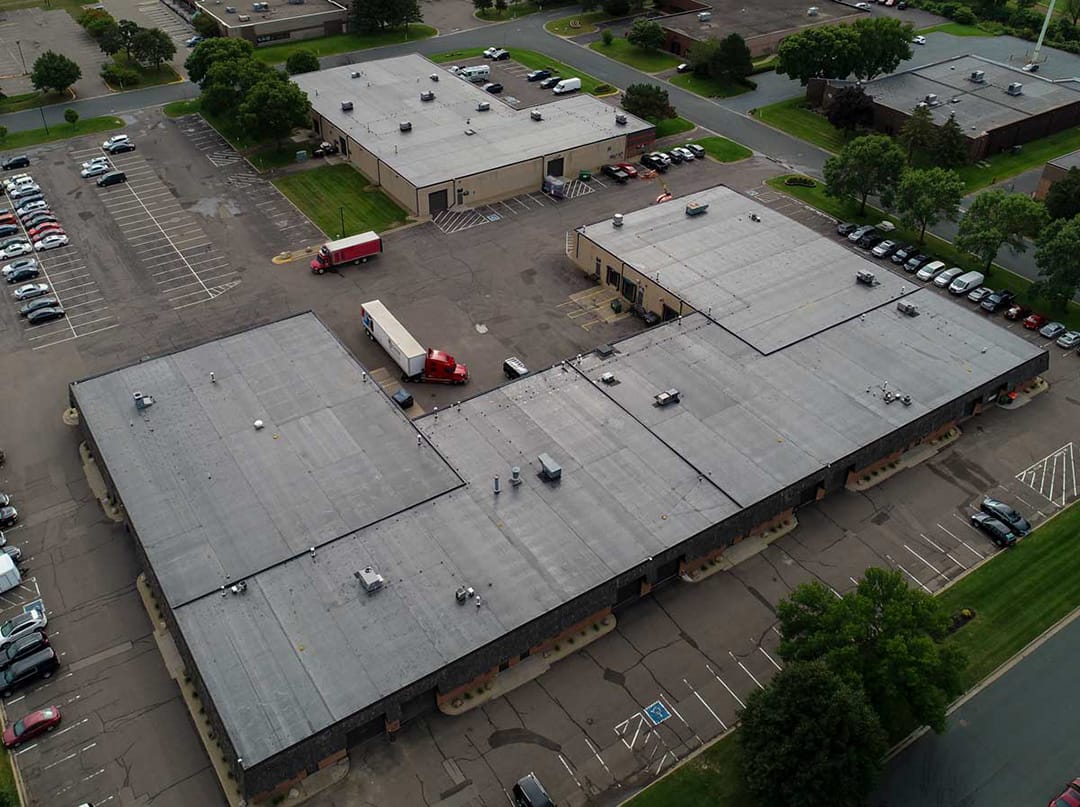
New Construction Roofing
New Construction Roofing is scoped around freeze-thaw cycles after spring storms, Cheyenne Regional Medical Center area offices, and Cheyenne Regional Airport facilities. We keep access, weather windows, and tenant disruption in the plan before crews step onto the roof.
View Scope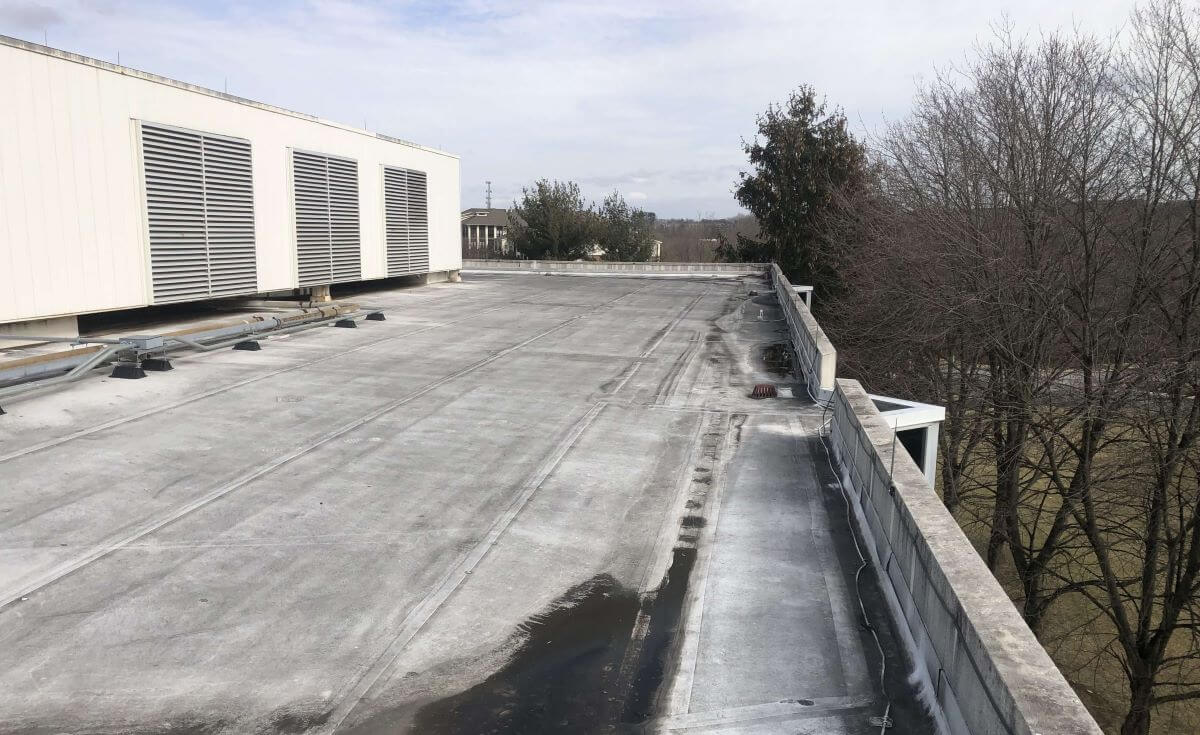
Roof Recover and Overlay
Roof Recover and Overlay is scoped around South Cheyenne industrial sites, Laramie County business parks, and Cheyenne Logistics Hub properties. Every recommendation is tied to observed conditions, not a prewritten roof package.
View ScopeGet the roof decision into writing.
Tell us what changed on the roof, where the building sits, and who needs the report. We will turn the next step into a clear scope.