 Contact Us Now

Competitive Bid Coordination in Cheyenne, WY
For Competitive Bid Coordination, we look at the roof as an operating asset, not a one-time line item. We consider snow drift at parapets and rooftop units, Capitol Avenue office buildings, F.E. Warren Air Force Base area contractors, and freeze-thaw cycles after spring storms before we recommend work.
That keeps the scope tied to the roof that is actually on the building: membrane condition, seams, metal, drainage, rooftop units, access, tenant needs, and timing.
Managing a competitive bid process for a Cheyenne commercial roof project is a professional function that requires both roofing technical knowledge and procurement process discipline. The two skills are rarely combined in the same person within a building owner's organization, which is why bid processes for significant roofing projects in Cheyenne, at Cheyenne Business Parkway, at government-adjacent facilities, at the logistics parks along I-25 and I-80, are often either technically underdeveloped (vague specs that invite incomparable proposals) or procedurally inconsistent (bids solicited from unqualified contractors, or award decisions made without proper documentation). Structured bid coordination addresses both problems simultaneously and consistently produces better project outcomes than informal procurement.
Pre-bid qualification is the first step that separates a structured bid process from an open solicitation. Not every contractor who submits a bid on a Cheyenne commercial roof project has the qualifications the project requires, Wyoming contractor license, manufacturer system certification, adequate insurance and bonding, and demonstrated experience with the specific system type and building scale. Issuing an invitation to bid to unqualified contractors wastes their time and yours, produces proposals that cannot be fairly compared to qualified bids, and occasionally results in award to a contractor who cannot perform. Pre-qualification filters the bid list to contractors who meet the project's minimum requirements before the invitation goes out, which improves the quality of the competitive pool and the usefulness of the resulting proposals.
Specification writing is where bid quality is determined. A tight, complete specification eliminates scope ambiguity that allows contractors to bid different work at different prices while appearing to compete on equal terms. For a Cheyenne commercial roof project, the specification must address: substrate preparation standard, insulation type and R-value, membrane system and thickness, fastening pattern by roof zone (field, perimeter, corner), flashing heights at all conditions, drain detail type and heat trace requirements, edge metal design standard, required quality control testing, warranty terms, and documentation requirements at closeout. We write specifications at this level of detail for every project we manage, and the resulting bids are genuinely comparable rather than requiring extensive interpretation before an apples-to-apples comparison can be made.
Government-facility procurement for Cheyenne municipal buildings and government-adjacent contractor facilities follows procedural requirements that differ from private commercial procurement. Public projects above specified dollar thresholds in Wyoming require competitive bidding under state procurement rules, including public advertisement of the bid, sealed bid submission, public bid opening, and award to the lowest responsible bidder. Prevailing wage compliance under Wyoming law or federal Davis-Bacon requirements (for federally funded projects) adds payroll documentation and certification requirements that must be incorporated into the bid documents. We are familiar with these requirements and structure bid packages to comply with applicable procurement rules rather than creating a compliance problem at award or during project execution.
Bid spec writing for Cheyenne Business Parkway and other institutional property owners often involves alignment with the owner's existing contractor qualification standards and procurement policies. Institutional owners may have preferred contractor lists, insurance minimums, indemnification requirements, and contract templates that must be incorporated into the bid package. We work within the owner's procurement framework rather than proposing a new one, and we ensure that the roofing-specific technical requirements are fully integrated into the owner's standard contract structure rather than existing as separate documents that create conflict or ambiguity about which terms govern.
Bid opening and evaluation requires a consistent methodology that separates price comparison from contractor qualification review. We recommend that bid evaluation be conducted in two stages: first, a qualification review to confirm that all bidders meet the pre-qualification criteria and have submitted a complete bid; second, a price comparison on the qualified bids only, normalized to a common scope basis through bid leveling. Bids that are incomplete, do not meet qualification requirements, or contain significant scope qualifications that alter the comparison basis are flagged for clarification or disqualification before the price comparison begins. This two-stage approach prevents the scenario where an incomplete or unqualified low bid creates pressure to award to a contractor who cannot perform.
Contractor evaluation beyond price involves assessing the specific team being proposed for the project, not just the contractor's general reputation. The project superintendent and lead installer who will actually execute the Cheyenne project matter more than the company's aggregate portfolio. We recommend requiring contractors to identify the project superintendent and key crew members as part of their bid submission and to document those individuals' specific experience with the proposed system type. A contractor who substitutes a less experienced superintendent after award, a common industry practice, should face a contract provision requiring owner approval for key personnel changes.
Post-award bid documentation provides the building owner with a record of the procurement process that supports the contract, defends the award decision if it is questioned, and provides a baseline for change order evaluation throughout the project. We compile the bid tabulation, bid leveling matrix, qualification evaluation records, and award recommendation into a single procurement file that is delivered to the building owner at contract execution. For government-facility projects, this documentation satisfies the record-keeping requirements of public procurement rules. For private projects, it provides the institutional memory of what was bid and what was agreed to, which matters when a contractor claims that a scope item was not included in the bid price three months into the project.
Questions Owners Ask
What is bid leveling and why does it matter for a Cheyenne commercial roof project?
Bid leveling is the process of adjusting raw bid prices to a common scope basis so that genuine price differences between contractors are visible, separate from scope interpretation differences. On a typical Cheyenne commercial roof bid, different contractors make different assumptions about scope items that were not explicitly addressed in the specification, how many penetrations are included, what the substrate preparation scope covers, whether existing flashings are replaced or retained. Leveling identifies these scope differences, quantifies the cost impact of each, and adjusts all bids to the same scope. Only after leveling does the actual competitive price difference between contractors become clear. Without leveling, the apparent low bid may simply be the contractor who assumed the smallest scope, not the one with the best price for the actual work required.
How many contractors should be invited to bid a Cheyenne commercial roof project?
Three to five pre-qualified contractors is the right range for most Cheyenne commercial projects. Fewer than three does not provide meaningful competition or market validation. More than five creates evaluation burden without proportional benefit, the qualified contractor pool for large-scale commercial roofing in Cheyenne is limited, and inviting unqualified contractors to fill out the list produces bids that cannot be reliably evaluated. The goal is three to five bids from contractors who have all been screened for Wyoming licensing, manufacturer certification, relevant experience, and financial and bonding capacity before the invitation goes out.
Does competitive bidding apply to government facilities in Cheyenne?
Yes. Wyoming state procurement rules require competitive bidding for public construction projects above specified dollar thresholds, and federal Davis-Bacon requirements apply to federally funded projects including many at or adjacent to F.E. Warren AFB. Public competitive bidding requirements include public advertisement of the bid opportunity, sealed bid submission, public bid opening at a specified time and location, and award to the lowest responsive and responsible bidder. Deviating from these procedures without proper authorization can invalidate the procurement and require re-bidding. We structure government-facility bid packages to comply with applicable procurement rules from the outset.
What should the bid documents include beyond the specification and drawings?
A complete commercial roof bid package includes: the invitation to bid with submission deadline and format requirements, pre-qualification requirements and documentation to be submitted with the bid, the technical specification, roof plan and detail drawings, project schedule requirements, insurance and bonding requirements, the contract form to be executed after award, any special conditions relevant to the specific building or project type, and instructions for submitting requests for information (RFIs) during the bid period. Missing any of these elements creates gaps that contractors fill with assumptions, which is how scope ambiguity and post-award disputes originate.
Can we negotiate after the bids come in, or must we award to the low bidder?
In private commercial procurement, negotiation after bid opening is entirely permissible and common. The most transparent approach is a best-and-final-offer round issued simultaneously to the top two or three qualified bidders after the initial bids are leveled and evaluated. In public procurement, the rules are more restrictive, Wyoming public procurement generally requires award to the lowest responsive and responsible bidder without negotiation, though value engineering discussions within scope may be permitted in some circumstances. We structure the bid process to reflect the applicable procurement environment and advise building owners on what negotiation options are available and appropriate for their specific project.
Related Roof Work
Useful next pages for this roof decision.

Commercial Reroofing
Commercial Reroofing is scoped around F.E. Warren Air Force Base area contractors, freeze-thaw cycles after spring storms, and Cheyenne Regional Medical Center area offices. The scope stays practical: stop water first, document the roof, then choose the repair or replacement path that fits the building.
View Scope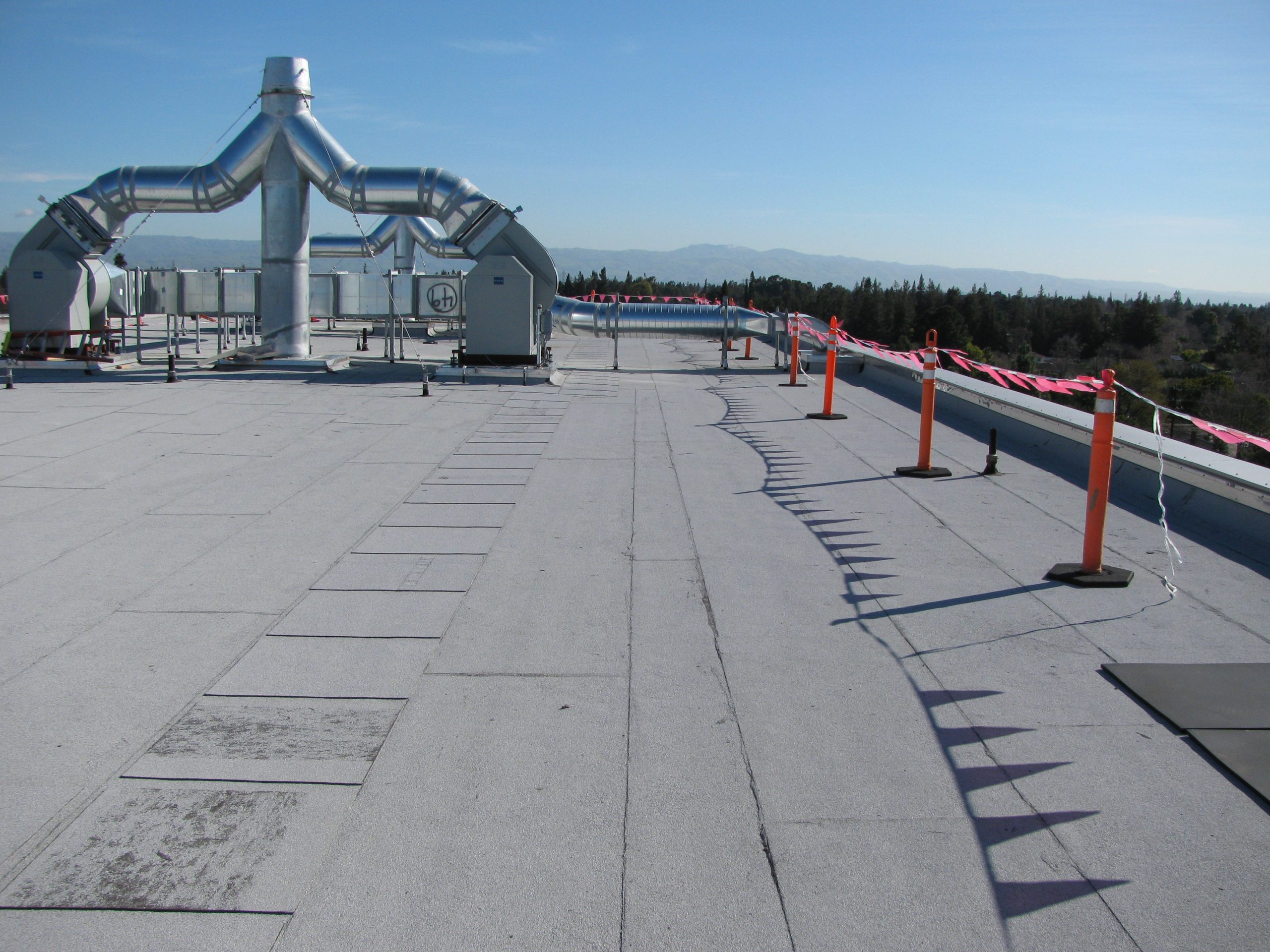
Occupied Building Re-Roofing
Occupied Building Re-Roofing is scoped around freeze-thaw cycles after spring storms, Cheyenne Regional Medical Center area offices, and Cheyenne Regional Airport facilities. We keep access, weather windows, and tenant disruption in the plan before crews step onto the roof.
View Scope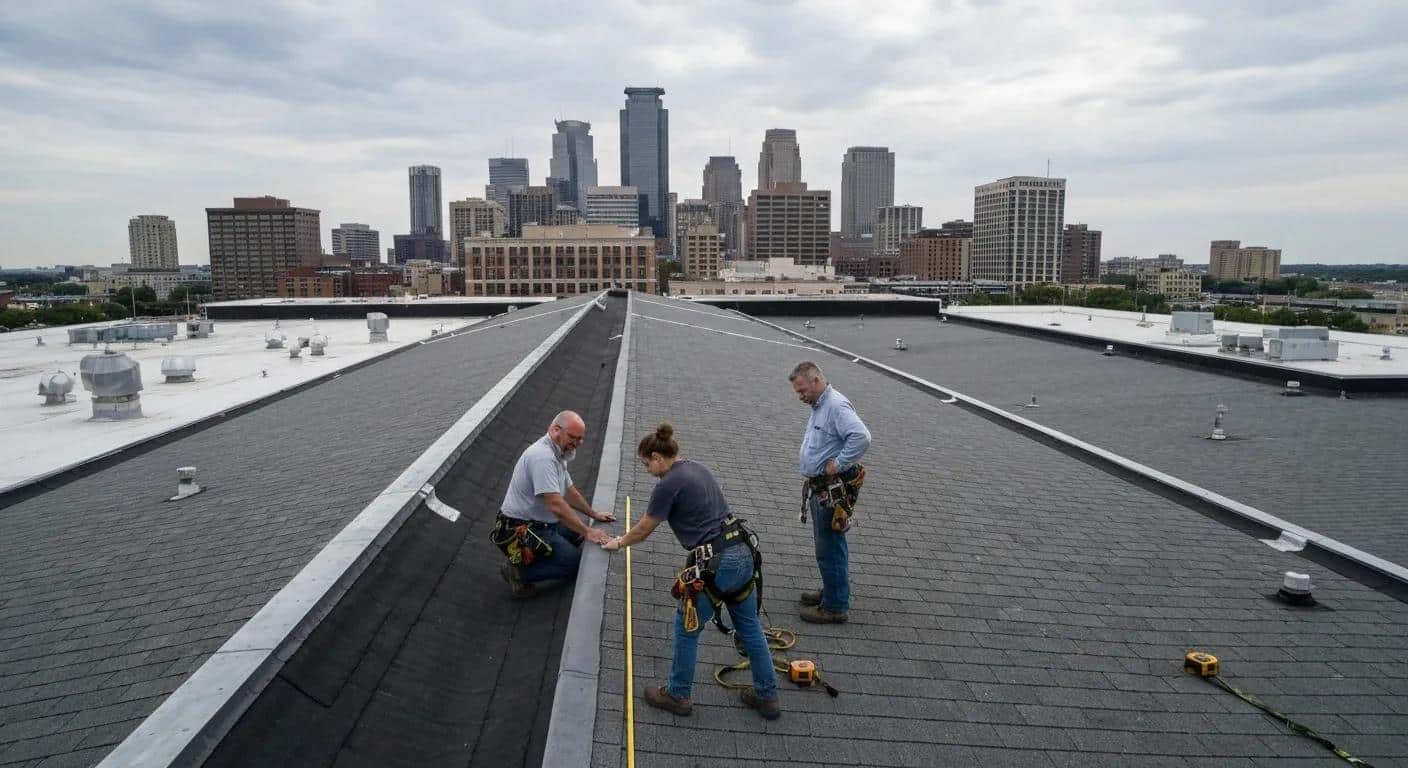
New Commercial Roofing
New Commercial Roofing is scoped around North Range Business Park warehouses, the I-25 and I-80 freight interchange, and Frontier Mall and nearby service buildings. Every recommendation is tied to observed conditions, not a prewritten roof package.
View ScopeGet the roof decision into writing.
Tell us what changed on the roof, where the building sits, and who needs the report. We will turn the next step into a clear scope.