 Contact Us Now
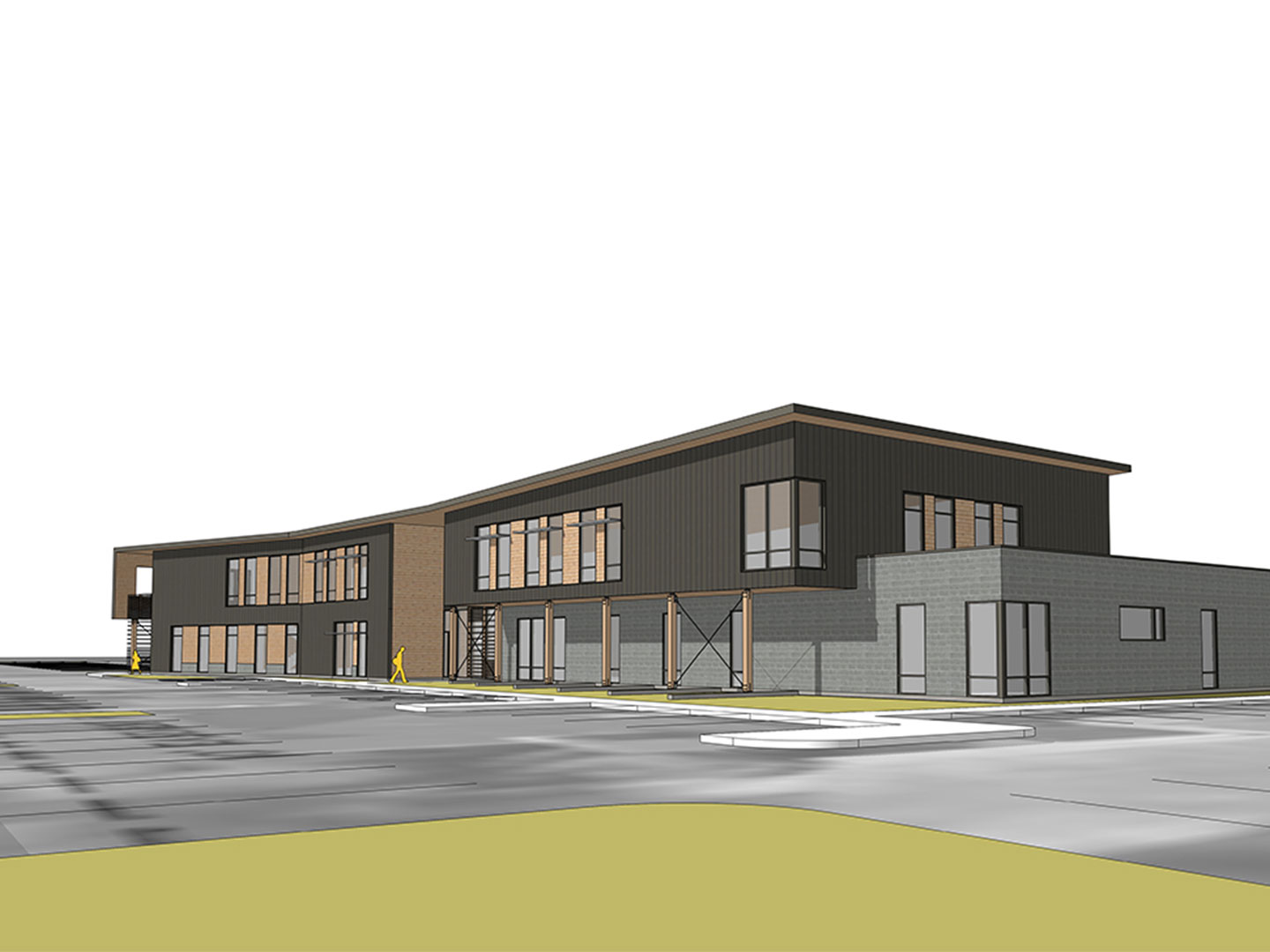
Healthcare Facility Roofing in Cheyenne, WY
The first move on Healthcare Facility Roofing is separating visible symptoms from the assembly condition below them. We consider Dell Range Boulevard retail roofs, Lincolnway corridor storefronts, South Cheyenne industrial sites, and Laramie County business parks before we recommend work.
That keeps the scope tied to the roof that is actually on the building: membrane condition, seams, metal, drainage, rooftop units, access, tenant needs, and timing.
Cheyenne, Wyoming serves as the healthcare hub for the southeastern corner of a state with one of the lowest population densities in the country, meaning that Cheyenne's hospitals and medical facilities carry a disproportionate regional responsibility. Cheyenne Regional Medical Center on East 18th Avenue is the state's largest hospital and the primary referral destination for a vast catchment area spanning Laramie, Goshen, and Platte counties. United Medical Center serves as a secondary acute care option, and the growing network of VA-affiliated clinics and specialty outpatient facilities along College Drive rounds out a healthcare infrastructure that must remain operational through the most extreme weather conditions on the High Plains. Roofing these facilities is not a routine commercial endeavor, it is a life-safety obligation executed in one of the most climatically demanding environments in the western United States.
Cheyenne's wind is a defining challenge for every rooftop in the city, and healthcare facilities are no exception. The city averages the highest sustained wind speeds of any state capital in the country, with chinook wind events regularly producing gusts exceeding 60 MPH and periodic extreme events topping 90 MPH. At these wind loads, a roofing membrane that is inadequately fastened at its perimeter or that has developed seam weakness from UV degradation is at genuine risk of partial uplift. Healthcare facility rooftops at Cheyenne Regional and the surrounding medical campus require uplift-rated assemblies tested to ANSI/FM 4470 or UL 580 standards, with fastening densities verified by third-party pull testing after installation.
Snow and ice management on Cheyenne healthcare rooftops requires both structural preparation and operational responsiveness. The city receives approximately 60 inches of snowfall annually, and the High Plains wind that defines Cheyenne causes significant snow drift accumulation at parapets, mechanical equipment screens, and low points between roof sections. Drifted snow loads can far exceed the uniform snow load used in structural design, creating localized stress concentrations that older roof decks may not accommodate safely. We provide drift analysis as part of every condition assessment at Cheyenne healthcare facilities, identifying high-drift zones and recommending structural evaluation where accumulation patterns suggest loads that may approach deck capacity limits.
Medical gas penetrations through Cheyenne healthcare rooftops must be sealed against both wind-driven moisture and the ice formation that can occur when warm moist exhaust from interior spaces meets the sub-zero temperatures characteristic of Wyoming winters. Pipe boot failures at gas line and HVAC penetrations are among the most common sources of interior moisture intrusion at Cheyenne Regional and the city's specialty facilities. Elastomeric pipe boot systems rated for low-temperature flexibility are essential in this climate, standard EPDM boots that perform adequately in milder climates can become brittle and crack during a Wyoming cold snap, creating an immediate waterproofing failure that standard inspection would not predict.
The VA Black Hills Health Care System serves a substantial veteran population in Cheyenne and coordinates care with VA clinic locations throughout southeastern Wyoming. Federal healthcare facilities at or affiliated with the VA system are subject to VA Master Construction Specifications for roofing, which set specific material standards, installation procedures, and documentation requirements that differ from standard commercial practice. Our crews maintain current familiarity with VA Whole Building Design Guide roofing specifications and can deliver the inspection, documentation, and certification packages required to satisfy federal facility management requirements. VA-affiliated clinic construction and renovation in Cheyenne has accelerated in recent years, making this specialized competency increasingly relevant to the local healthcare roofing market.
Infection control during roofing work in Cheyenne's climate presents challenges that southern-market healthcare contractors rarely encounter. The extreme cold and wind make it impractical to leave HVAC intake openings unprotected while installing barriers, requiring a rapid-deployment barrier system that can be installed and sealed within minutes in cold-weather conditions. Our crews use pre-fabricated HEPA barrier panels sized for the specific intake dimensions at enrolled facilities, allowing intake protection to be established quickly even in temperatures below 20°F. Infection Control Risk Assessment protocols developed for Cheyenne conditions account for the temperature and wind factors that influence how quickly airborne particles disperse and whether they can reach clinical air handling intakes.
Cheyenne's assisted living and memory care facilities serve a population that is both older and more widely dispersed than in most Rocky Mountain cities. Facilities on the eastern and southern edges of the city, closer to the grasslands where wind speeds are highest, face the most aggressive exposure conditions. Several of these facilities were constructed in the 1990s with built-up roofing systems that have long since passed their design life, operating on reactive maintenance alone. Wyoming Department of Health surveys of assisted living facilities include building condition assessments, and an aging roof showing evidence of deferred maintenance is among the physical plant findings that can trigger a correction plan. Planned replacement is consistently less disruptive to residents and less expensive to operators than emergency remediation following a storm-related failure.
The outpatient and specialty care expansion underway along Cheyenne's Dell Range Boulevard and Yellowstone Road corridors is bringing new healthcare construction to neighborhoods that were previously underserved by specialty practices. Orthopedic surgery centers, cancer treatment clinics, and multi-specialty medical office buildings are being built to modern energy codes that require high-R-value roof assemblies with thermal breaks at structural connections. Polyisocyanurate insulation specified to achieve R-30 or higher, combined with reflective TPO membranes, reduces the heating energy load in Wyoming's cold winters while meeting the waterproofing requirements of the clinical spaces below. System design for these projects must account for Wyoming's short construction season, membrane seaming in temperatures below 40°F requires specialized tools and techniques to achieve welds that match full-temperature installation quality.
Long-term roofing partnerships with Cheyenne Regional Medical Center and the city's independent healthcare facilities are built on a foundation of documented performance and emergency response capacity that matches the operational reality of healthcare delivery in a rural state capital. When a winter storm tracks through the Laramie Range and deposits ice on Cheyenne rooftops overnight, the facilities at CRMC and its affiliated clinics need a roofing partner that is already stocked, already on call, and already familiar with every penetration and drain on their rooftops. Preventive maintenance programs with pre-established emergency response protocols and an annual inspection calendar are not a luxury in this environment, they are the operational standard that healthcare facility managers in Wyoming have learned to require from their roofing contractors.
- What wind uplift standard should healthcare rooftops in Cheyenne meet?
- Healthcare facilities in Cheyenne should specify roofing assemblies tested to ANSI/FM 4470 Class 1-90 or higher, given the city's extreme sustained and gust wind speeds. Hospitals and essential facilities are assigned higher risk categories under ASCE 7, requiring design wind speeds that exceed standard commercial requirements. Third-party fastener pull testing after installation documents that the installed system meets the specified uplift resistance.
- How does snow drift accumulation affect Cheyenne hospital rooftops?
- High Plains wind causes snow to drift dramatically at parapets, equipment screens, and roof level transitions, creating localized load concentrations that can significantly exceed the uniform design snow load. A drift analysis using ASCE 7 Chapter 7 procedures identifies high-accumulation zones at each specific facility. Structural evaluation of older roof decks at identified drift zones is recommended to verify that the deck can safely carry the anticipated accumulated load.
- Do VA-affiliated healthcare facilities in Wyoming require different roofing specifications?
- Yes, VA-affiliated and VA-owned facilities are subject to VA Master Construction Specifications and VA Whole Building Design Guide standards for roofing, which set specific requirements for materials, installation procedures, flashing details, and warranty documentation. These specifications differ from standard commercial practice in several areas and require contractors with direct familiarity with VA procurement and documentation requirements. Failure to meet VA specifications can result in warranty voidance and correction obligations.
- What pipe boot material should be used for medical gas penetrations in Wyoming's cold climate?
- Low-temperature elastomeric pipe boots rated to remain flexible at temperatures of minus 40°F or lower are required at Wyoming healthcare facilities to prevent the cracking that occurs with standard EPDM boots during extreme cold snaps. Prefabricated stainless steel flashing collars with elastomeric throat seals are the preferred detail at high-priority penetrations like medical gas risers. Each penetration should be inspected each spring specifically for cold-weather stress cracking that may have developed during the winter season.
- How should roofing contractors handle membrane seaming in Cheyenne's cold weather construction season?
- TPO and PVC membranes require elevated seaming temperatures that are difficult to achieve in ambient temperatures below 40°F without specialized heat-welding equipment equipped for cold-weather compensation. Crews should use hot-air tools calibrated for low-ambient conditions and conduct test welds at each cold-weather session to verify seam quality before proceeding. Membrane rolls should be stored in heated enclosures and allowed to relax to workable condition before installation in cold weather to prevent membrane brittleness during seaming.
Related Roof Work
Useful next pages for this roof decision.

Commercial Roof Replacement
Commercial Roof Replacement is scoped around Lincolnway corridor storefronts, South Cheyenne industrial sites, and Laramie County business parks. The scope stays practical: stop water first, document the roof, then choose the repair or replacement path that fits the building.
View Scope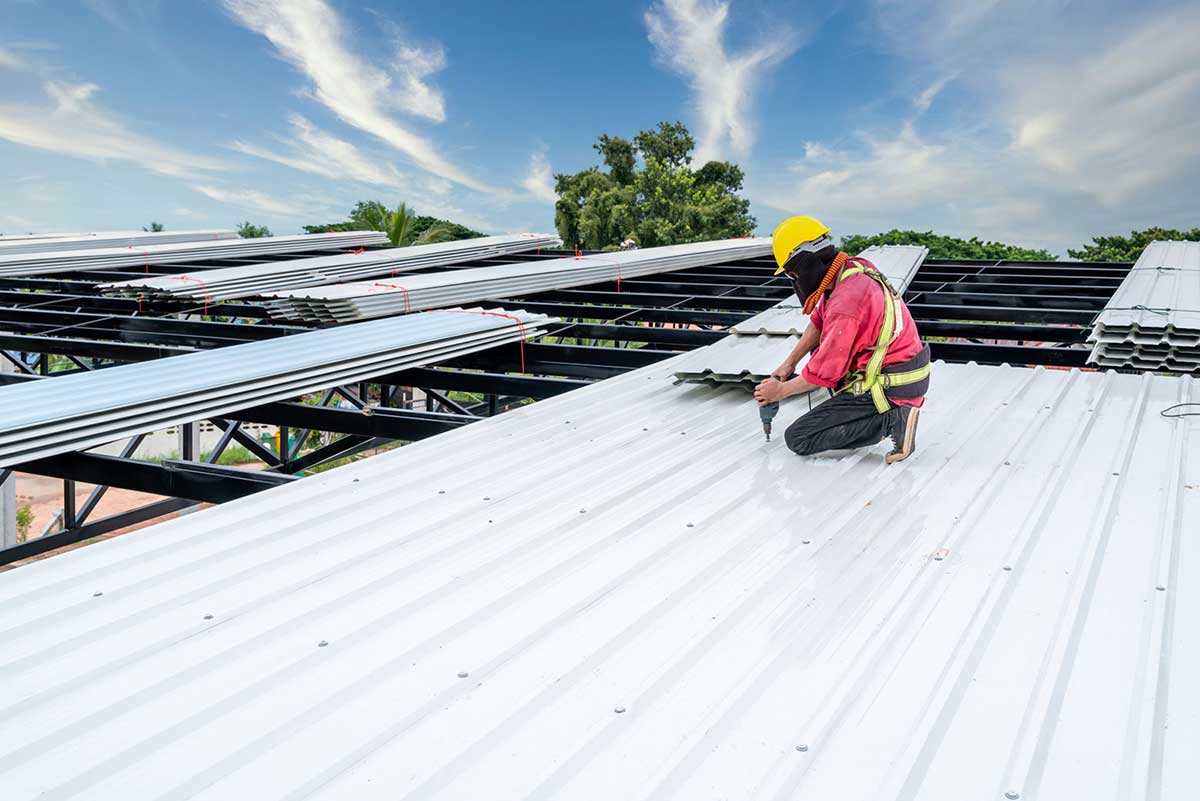
Commercial Reroofing
Commercial Reroofing is scoped around F.E. Warren Air Force Base area contractors, freeze-thaw cycles after spring storms, and Cheyenne Regional Medical Center area offices. We keep access, weather windows, and tenant disruption in the plan before crews step onto the roof.
View Scope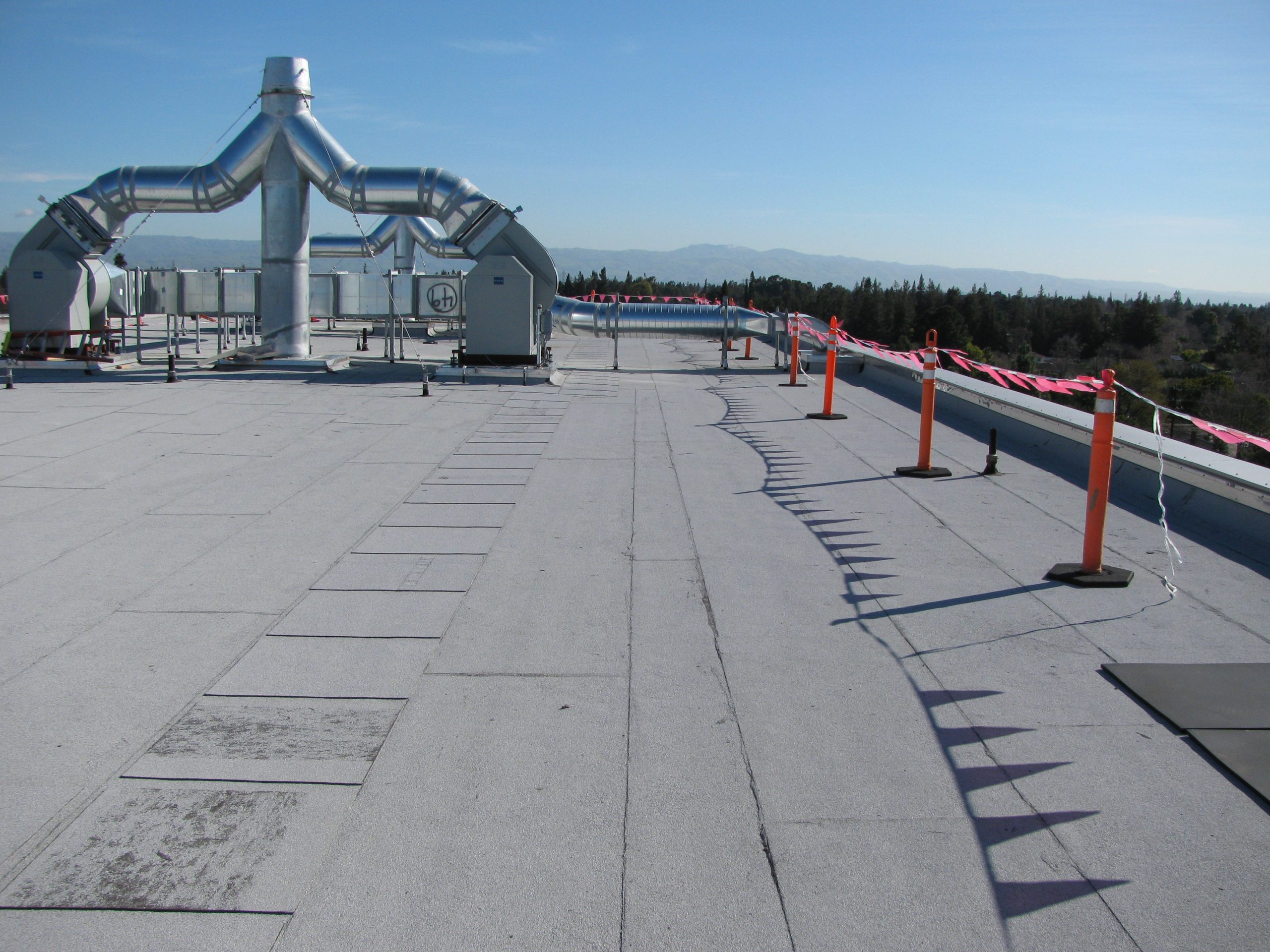
Occupied Building Re-Roofing
Occupied Building Re-Roofing is scoped around freeze-thaw cycles after spring storms, Cheyenne Regional Medical Center area offices, and Cheyenne Regional Airport facilities. Every recommendation is tied to observed conditions, not a prewritten roof package.
View ScopeGet the roof decision into writing.
Tell us what changed on the roof, where the building sits, and who needs the report. We will turn the next step into a clear scope.